
Kia Cee'd: Fuel Delivery System / Fuel Line Repair procedures
| Removal |
| 1. |
Turn the ignition switch OFF, and then remove battery (-) cable.
|
| 2. |
Release the residual pressure in fuel line.
(Reter to Fuel Delivery System - "Release Residual Pressure in Fuel
Line")
|
| 3. |
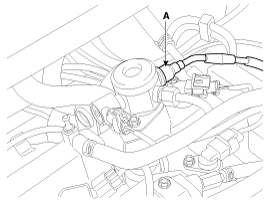
Disconnect the low pressure fuel quick-connector (A).
|
| 4. |
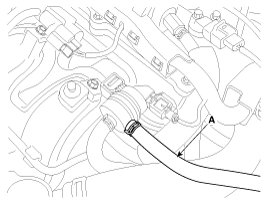
Disconnect the vapor hose (A) which is connected from the PCSV.
|
| 5. |
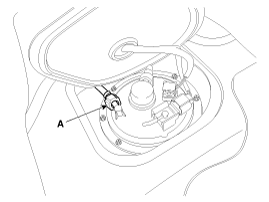
Disconnect the fuel feed quick-connector (A) freom the fuel pump.
|
| 6. |
Lift the vehicle.
|
| 7. |
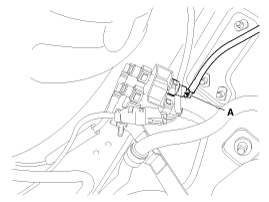
Disconnect the vapor tube quick-connector (A).
|
| 8. |
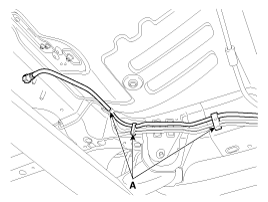
Open the vapor tube line fixing clip (A) to using driver.
|
| 9. |
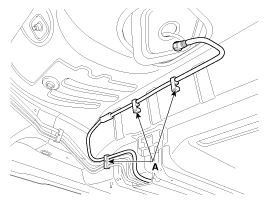
Open the fuel feed line fixing clip (A) to using driver.
|
| 10. |
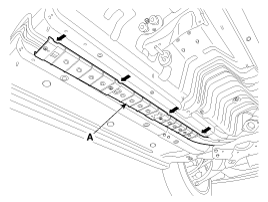
Disconnect the fuel & brake line protect (A) from the fixing clip.
|
| 11. |
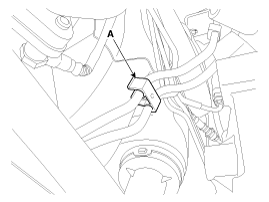
Disconnect the fuel feed line fixing clip (A) from engine room lower.
|
| 12. |
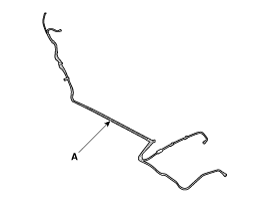
Remove the fuel line (A).
|
| Installation |
|

|
| 1. |
Installation is reverse of removal.
|
 Fuel Pressure Regulator Repair procedures
Removal
1.
Remove the fuel pump.
(Refer to Fuel Delivery System - “Fuel Pump”)
2.
Disconnect the electric pump & sender ...
 Filler-Neck Assembly Repair procedures
Removal
1.
Lift the vehicle.
2.
Disconnect the fuel filler hose (A), leveling hose (B) and the ventilation
hose (C).
...
Other information:
: Stability Control
How Does Stability Control Work
WARNING: Vehicle modifications
involving braking system, aftermarket
roof racks, suspension, steering system,
tire construction and wheel and tire size
may change the handling characteristics
of your vehicle and may adversely affect
the performance of the electr ...
Kia Cee'd JD Service Manual: Transmission Gear Oil Repair procedures
Inspection
In principle, the transmission oil is maintenance-free, and no exchange
is required.
But it must be inspected and replenished every 4 years or 40,000 miles.
1.
...
© 2017-2026 www.kceed.com
