
Kia Cee'd: Brake system / Electronic stability control (ESC)
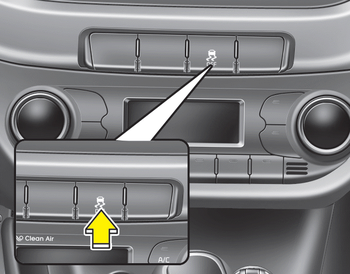
The Electronic Stability Control (ESC) system is designed to stabilize the vehicle during cornering maneuvers. ESC checks where you are steering and where the vehicle is actually going. ESC applies the brakes at individual wheels and intervenes with engine management system to stabilize the vehicle.
WARNING
Never drive too fast for the road conditions or too quickly when cornering. Electronic stability control (ESC) will not prevent accidents. Excessive speed in turns, abrupt maneuvers and hydroplaning on wet surfaces can still result in serious accidents. Only a safe and attentive driver can prevent accidents by avoiding maneuvers that cause the vehicle to lose traction. Even with ESC installed, always follow all the normal precautions for driving - including driving at safe speeds for the conditions.
The Electronic stability control (ESC) system is an electronic system designed to help the driver maintain vehicle control under adverse conditions. It is not a substitute for safe driving practices. Factors including speed, road conditions and driver steering input can all affect whether ESC will be effective in preventing a loss of control. It is still your responsibility to drive and corner at reasonable speeds and to leave a sufficient margin of safety.
When you apply your brakes under conditions which may lock the wheels, you may hear a “tik-tik’’ sound from the brakes, or feel a corresponding sensation in the brake pedal. This is normal and it means your ESC is active.
✽ NOTICE
A click sound may be heard in the engine compartment when the vehicle begins to move after the engine is started. These conditions are normal and indicate that the Electronic stability control (ESC) System is functioning properly.
 Anti-lock brake system (ABS)
WARNING
ABS (or ESC) will not prevent accidents
due to improper or dangerous
driving maneuvers. Even
though vehicle control is improved
during emergency braking, always
maintain a safe dist ...
 ESC operation
ESC ON condition
When the ignition is turned
ON, ESC and ESC OFF indicator
lights illuminate for
approximately 3 seconds,
then ESC is turned on.
Press the ESC OFF button
for at ...
Other information:
Kia Cee'd JD Service Manual: Specifications
Specifications
Items
Specifications
Rated voltage
DC 12V
Operating voltage
DC 9 ~ 16V
Operating temperature
-30°C~ 80°C (-22°F~176°F)
Dark cur ...
Kia Cee'd JD Service Manual: Fuel Pressure Control Valve Specifications
Specification
Item
Specification
Coil Resistance (Ω)
0.5 [20°C(68°F)
...
