
Kia Cee'd: Brake System / Brake Line Repair procedures
| Removal |
| 1. |
Disconnect the brake fiuid level switch connector, and remove the reservoir
cap.
|
| 2. |
Remove the brake fluid from the master cylinder reservior with a syringe.
|

| 3. |
Remove the wheel & tire.
|
| 4. |
Disconnect the brake tube by loosening the tube flare nut (B).
Front
Rear
|
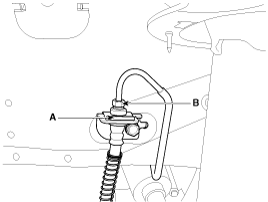
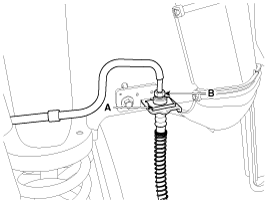
| 5. |
Remove the brake hose clip (A).
|
| 6. |
Disconnect the brake hose from the brake caliper by loosening the bolt
(C).
Front
Rear
|
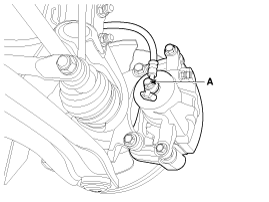
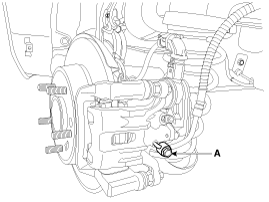
| Inspection |
| 1. |
Check the brake tubes for cracks, crimps and corrosion.
|
| 2. |
Check the brake hoses for cracks, damage and fluid leakage.
|
| 3. |
Check the brake tube flare nuts for damage and fluid leakage.
|
| 4. |
Check brake hose mounting bracket for crack or deformation.
|
| Installation |
| 1. |
Install in the reverse order of removal.
|
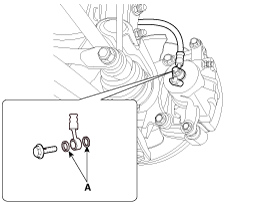
| 2. |
After installation, bleed the brake system.
(Refer to Brake system bleeding)
|
| 3. |
Check the spilled brake oil.
|
 Brake Line Components and components location
Components
...
 Brake Pedal Components and components location
Components [LHD]
1. Cowl bracket
2. Brake pedal member assembly
3. Stop lamp switch
4. Return spring
5. Brake pedal
6. Bolt
...
Other information:
Kia Cee'd JD Service Manual: Troubleshooting
Troubleshooting
Symptom
Suspect Area
Remedy (Refer to page)
Water leaks from panoramaroof
Deteriorated roof lid weatherstrip
Replace
Excessive roof lid-to-body clearance and im ...
Kia Cee'd JD Service Manual: Starter Description and operation
Description
The starting system includes the battery, starter, solenoid switch, ignition
switch, inhibitor switch (A/T), clutch pedal switch (M/T), ignition lock switch,
connection wires and the battery cable.
When the ignition key is turned to the start position, current ...
© 2017-2026 www.kceed.com
